How Much Does Interior Design Cost in Delhi NCR? A 2026 Breakdown
10 February 2026·7 min read·Planning
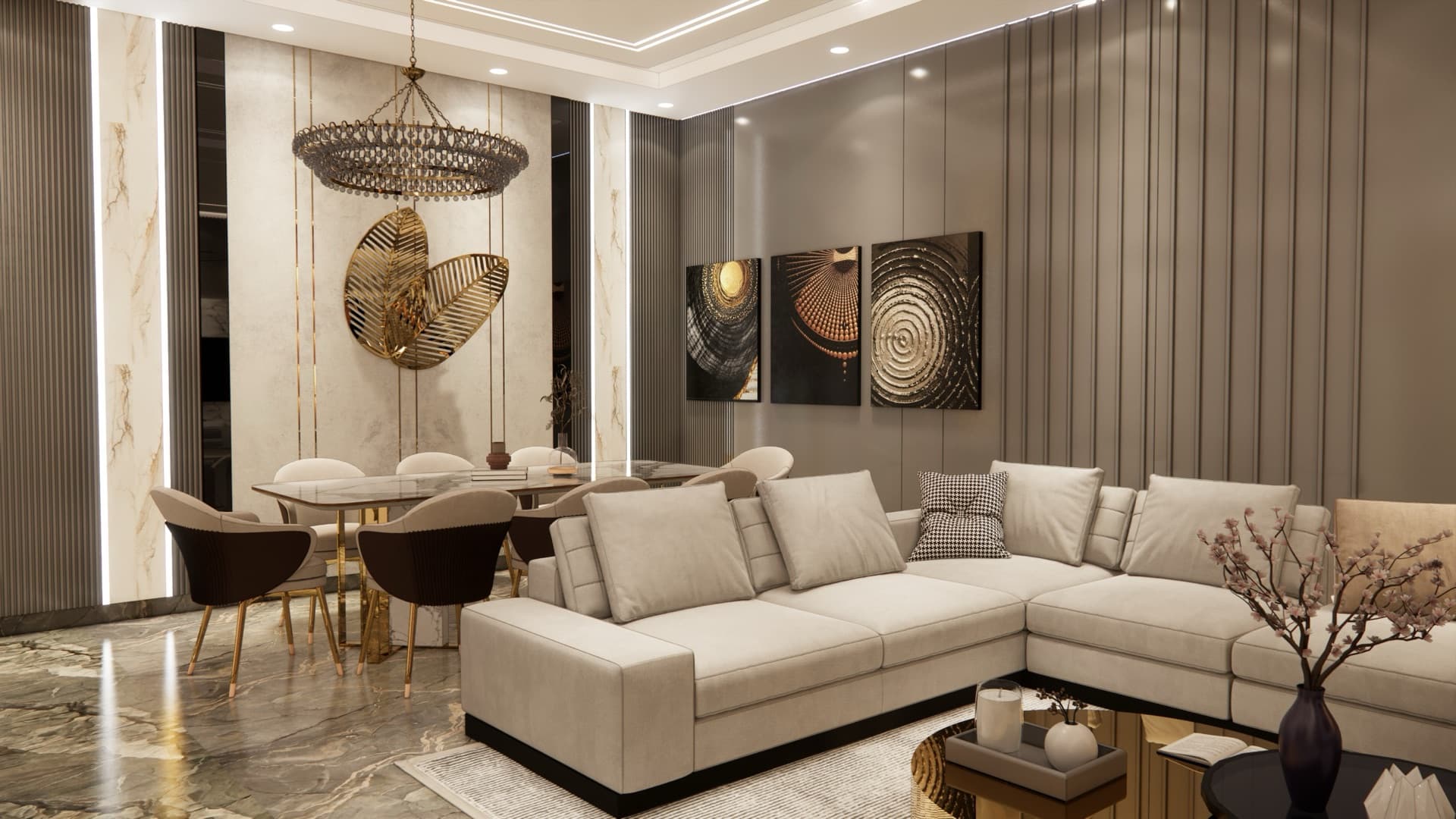
It is the first question almost every homeowner asks, and the hardest to get a straight answer to: what does interior design actually cost in Delhi NCR? The honest answer is that it depends — but 'it depends' is not useful when you are trying to plan. So here is a transparent breakdown of how pricing works across Delhi, Gurgaon and Noida in 2026, and where your money genuinely goes.
Most studios in the region quote in one of two ways. The first is a per-square-foot rate that bundles design and execution together. The second is a design fee (either a percentage of the project or a flat professional charge) kept separate from the cost of materials and labour. Boutique, made-to-measure practices tend toward the second model, because it keeps the studio's incentives aligned with yours rather than with the size of the material bill.
As a rough planning guide for a full-home, turnkey fit-out in Delhi NCR — including modular work, wardrobes, false ceilings, painting, lighting and basic loose furniture — the numbers tend to fall into these bands:
For a typical 1,200 sq ft 3 BHK, a mid-range full-home interior therefore lands somewhere between ₹22 lakh and ₹36 lakh. A more essential fit-out can come in under ₹18 lakh; a fully bespoke home can go well past ₹50 lakh. These are indicative — your actual figure depends on scope, materials and how much is custom-built versus factory-modular.
In most homes we plan, the budget concentrates in a few predictable places. Understanding this helps you decide where to invest and where to hold back:
Cost overruns rarely come from the big obvious things. They come from scope creep and from items that were never in the original quote. The usual culprits: upgrading hardware and hinges mid-project, adding more lighting circuits than planned, changing shutter finishes after seeing samples, and importing a stone or veneer that has to travel. A good studio will name these ranges up front rather than let them accumulate.
A realistic budget quoted honestly on day one is worth more than a low number that doubles by handover.
At SpaceMitra we begin every project with a clear, itemised estimate so you know the number before a single line is drawn — and so the finished home matches both the plan and the budget. If you are weighing up a project in Delhi, Dwarka, Gurgaon or Noida, a short conversation is the fastest way to get a figure grounded in your actual home.
Your home, next
Share your floor plan and how you live. We'll reply the same day with a clear first step.